Children begin communicating long before they say their first word. A look towards a familiar voice, an excited sound when a favourite toy appears or a hand reaching to be picked up are all important attempts to connect.
As children grow, these early exchanges gradually develop into words, sentences, stories and conversations. Every child follows their own path, though warm relationships and plenty of meaningful interaction give them a strong foundation.
Nursery speech and language development is about much more than encouraging children to talk. It includes listening, understanding, gestures, eye contact, taking turns and learning that their ideas will be noticed. A child who feels safe, heard and valued is more likely to communicate with growing confidence.
How language develops in the early years
Speech and language develop at different rates. Some children use many words early on, while others take longer to speak but show clear understanding through gestures, sounds and their responses to familiar people.
Communication includes several connected skills:
- Listening and paying attention
- Understanding words, instructions and ideas
- Using sounds, gestures, signs and spoken language
- Taking turns in interactions
- Sharing feelings, needs and experiences
- Building relationships with adults and other children
Babies begin by responding to voices, facial expressions and sounds. They may babble back during a nappy change, copy an expression or use a gesture to show what they want. Toddlers often begin using single words then short phrases, alongside a rapidly growing understanding of everyday language.
By the preschool years, many children are using longer sentences, asking questions and joining conversations with friends and adults. They are also learning to describe what has happened, explain their ideas and use language in imaginative play.
These stages are a guide rather than a checklist. Progress can be uneven, especially when children are settling into a new routine or concentrating on other areas of development. The overall picture of how a child understands and communicates matters more than comparing them with another child.
Why the early years matter for communication
Communication and language is one of the three prime areas of learning in the Early Years Foundation Stage. It supports children as they build relationships, make sense of experiences and develop the foundations for later literacy and learning.
The most valuable language experiences are often simple, shared moments. A practitioner might notice a baby looking at rain on the window and say, “You can see the rain. It is falling down.” A toddler building a tower may hear, “You have made it very tall.” These responses help children connect words with what they are seeing, doing and feeling.
Back-and-forth interactions are particularly important. When adults pause, listen and respond, children learn that communication has a purpose.
A language-rich environment does not mean children are asked questions all day. It means adults use clear, meaningful language during routines and play, introduce useful new vocabulary and give children enough time to respond. Stories, songs, rhymes, imaginative play and conversation all have an important place.
Communication is closely connected to wellbeing too. Feeling secure with familiar adults helps children share ideas, join in and try new words without pressure. For more on this area of development, read how early years settings support emotional development.
How a nursery helps speech development every day
Much of the support for speech development happens naturally through the ordinary rhythm of a nursery day. Mealtimes, getting ready to go outside, choosing a book and exploring play materials all create genuine reasons to communicate.
Practitioners can model language by describing what children are doing and extending what they say. If a child points to a digger, an adult may say, “A yellow digger. It is scooping the sand.” This gives the child new words without asking them to repeat or perform.
Pausing matters just as much as talking. Some children answer quickly while others need a little longer to process what has been said. A calm adult who waits communicates that a child’s response is worth hearing, whether it arrives as a word, gesture, look or sound.
Stories, songs and rhymes
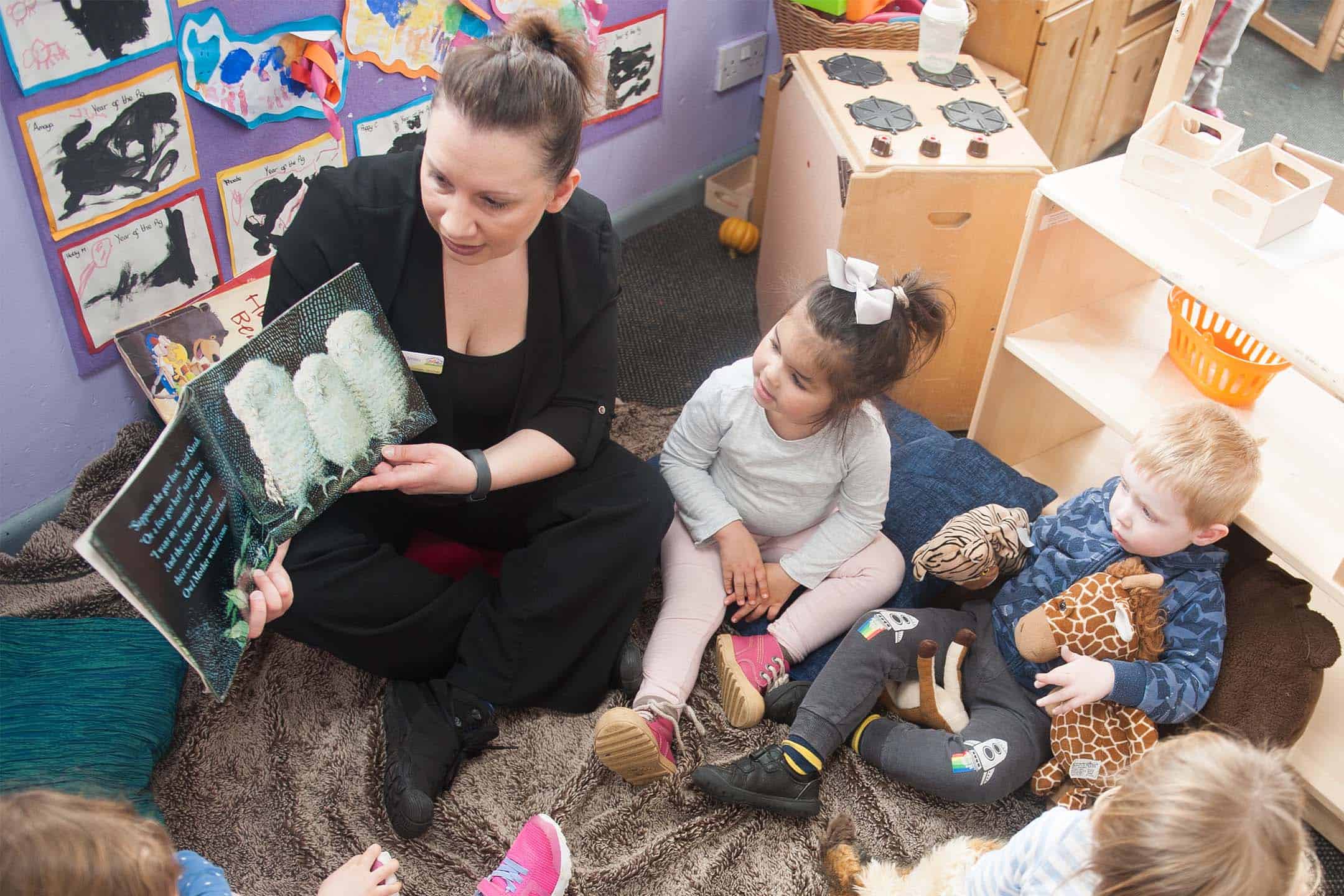
Books introduce children to new words, ideas and sentence patterns. Familiar stories can also help children join in with confidence. A child may point to a picture, turn a page or finish a repeated phrase before they are ready to contribute in a longer conversation.
Songs and rhymes support listening, memory and attention. Repetition helps children anticipate what comes next, notice the sounds within words and gradually take part in ways that feel comfortable. Actions can give younger children another way to show understanding and communicate alongside spoken language.
Conversations with other children
Nursery gives children regular opportunities to communicate with peers. They might ask for a turn, decide what should happen next in a game or explain how they have made a model.
These small exchanges develop social communication skills. Children learn that friends may have different ideas, that conversations involve listening as well as talking and that words can help them solve everyday problems together.
Some children feel most confident talking in a small group or during one-to-one play with an adult. Others enjoy speaking in larger groups. A thoughtful nursery environment provides different opportunities so children can take part in ways that suit their development.
Play gives children a reason to communicate
Play is one of the richest places for language to grow. In a home corner, children may become parents, shopkeepers or chefs. They make plans, give instructions and create stories.
Outside, a child might describe a muddy puddle, negotiate the rules of a game or ask a friend to help carry something. Construction play brings words such as balance, taller, underneath and bridge into a meaningful context. Creative activities encourage children to describe colours, textures and the ideas behind their work.
Open-ended resources are particularly helpful because they allow children to lead. A cardboard box might become a bus, a den or a dragon’s cave. As adults listen carefully and add language to these ideas, children gain new vocabulary.
Find out more about the benefits of learning through play.
When it may help to seek extra support
It is understandable to have questions about your child’s speech and language development. Children progress at different rates and there is a wide range of typical communication. Children who hear or use more than one language may also communicate differently depending on where they are and who they are with.
Speak to your health visitor, GP or nursery practitioner if you have an ongoing concern. Understandable concerns may include rarely responding to familiar voices or their name, difficulty understanding everyday language, frustration when trying to communicate or losing words and skills they had previously used.
These observations do not provide a clinical diagnosis, though further advice can be helpful. Families can share how their child communicates at home while nursery practitioners contribute observations from routines, play and friendships. Together, they can consider the right next steps, including whether support from speech and language therapy may be appropriate.
How parents can support language at home
Supporting language does not require complicated activities or specialist equipment. Everyday routines offer many opportunities to talk, listen and enjoy time together.
Helpful approaches include:
- Talk about what you are doing while getting dressed, preparing food or walking to the shops
- Follow your child’s interests and comment on what they notice
- Give them time to respond before adding more words
- Share books often and let them point, turn pages or retell familiar parts
- Sing favourite songs and use actions where appropriate
- Add to what your child says rather than correcting them
- Continue using the language that feels most natural within your family
Relaxed, enjoyable exchanges help children feel confident that communication is a positive part of everyday life.
How Sweet Peas supports communication and language
Sweet Peas has two individual nurseries in Leeds: Garforth and Rothwell. Across both settings, children are supported through close relationships, play, stories, songs and conversations that reflect their interests.
A familiar adult who knows a child well can notice the small ways they communicate and encourage their next steps naturally. Through our key person system, families can share what matters to their child, including favourite stories, gestures and emerging words.
Communication and language is woven through our curriculum, alongside the experiences that support children’s confidence, curiosity and wider development.
A visit is a chance to see how children learn through everyday nursery life and to speak with the team about any questions you may have. Book a nursery tour to explore Sweet Peas in person.
Frequently asked questions
- How does nursery help with speech development?
Nursery helps children develop speech through responsive conversations, stories, songs, routines and play. Trusted adults model language, introduce new words and give children time to listen, understand and respond.
- Does nursery help children talk sooner?
Nursery provides regular opportunities for children to communicate, though every child develops at their own pace. A supportive environment can strengthen confidence, vocabulary and interaction without putting pressure on children to speak before they are ready.
- How can I help my toddler talk more?
Talk about everyday activities, follow what interests your child, share books and songs and pause so they have time to respond. Building on their sounds, gestures and words can support language naturally.
- What are signs of a speech delay?
Possible signs include ongoing difficulty understanding familiar language, limited attempts to communicate through sounds, gestures or words, frustration linked to communication or losing skills already gained. Speak to a health visitor, GP or nursery team if you are concerned.
- How do nurseries support children with speech delay?
Nurseries can observe how a child communicates, adapt routines and activities, use visual support where helpful and work closely with families and relevant professionals. Support should reflect the child’s strengths, interests and stage of development.