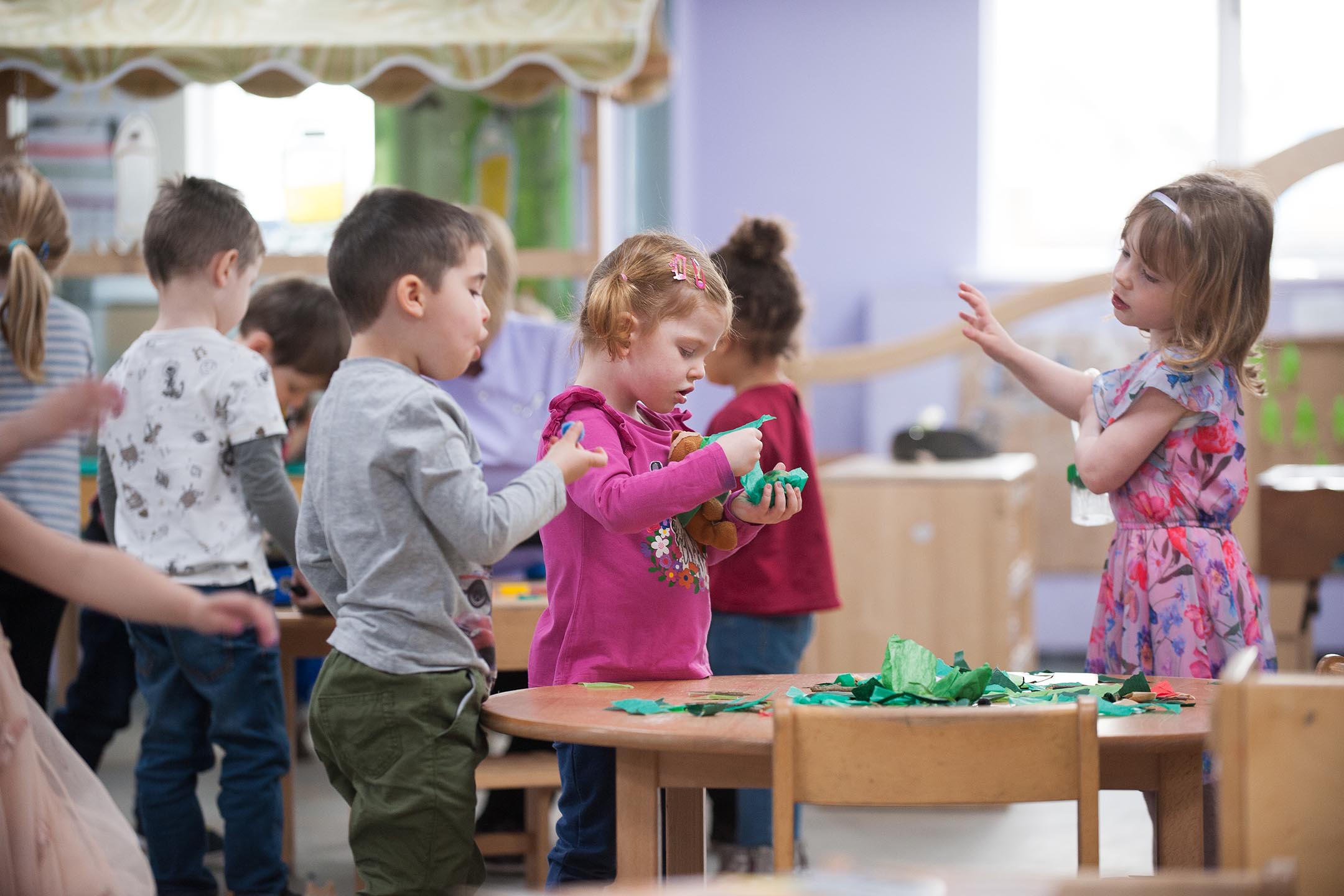
A child carefully serves their own breakfast and carries it to the table. Nearby, another is concentrating deeply as they try to pull up the zip on their coat before heading outdoors.
These may appear to be small moments, but to a young child they can represent something very important: I did that for myself.
At Sweet Peas Garforth, encouraging independence in the early years is not about expecting children to manage before they are ready. It is about skilled practitioners creating the right opportunities, allowing enough time and offering precisely the level of support each child needs.
For one child, this may mean trying independently while an adult remains quietly nearby. Another may need a demonstration, a reassuring prompt or a task broken into smaller steps. Both are making meaningful progress.
Independence grows through feeling secure enough to try. Our role is to ensure children know that support is always available while giving them the confidence and space to discover what they can do.
What Independence Means in the Early Years
Independence is about far more than dressing without help or managing a spoon.
It begins when children learn that their ideas matter, their choices have meaning and they can influence what happens around them. It includes communicating a preference, selecting where to play, attempting a new physical challenge, caring for belongings and persisting when something does not work immediately.
For a baby, independence may look like reaching for an interesting object, choosing which material to explore or beginning to move confidently around a thoughtfully prepared space.
A toddler may decide which story to share, attempt to pour a drink or communicate that they would like a turn. An older child may organise resources for an idea, manage part of their personal care or take responsibility within a familiar routine.
These experiences develop practical self-help skills, but they also strengthen:
- Communication and decision-making
- Coordination and physical control
- Problem-solving and perseverance
- Emotional regulation
- Confidence in asking for help
- A growing sense of responsibility
True independence does not mean never needing another person. It includes recognising when support is needed and feeling secure enough to seek it.
Skilled Support, Not Unnecessary Pressure
Children develop at different rates, and confidence can vary from one situation to another. A child who is highly independent in their play may still want help putting on their coat. Another may manage routines confidently but need reassurance when approaching something unfamiliar.
Our practitioners consider the whole child rather than expecting every child of a certain age to achieve the same thing at the same time.
They observe:
- What the child can already manage securely
- Which part of a task is creating difficulty
- Whether the child is becoming frustrated or remains productively challenged
- How much support will help without taking ownership away
- Whether the environment or routine could be adapted
- How the child responds to different forms of encouragement
This professional judgement protects children from being either rushed into independence or helped so quickly that they lose the opportunity to learn.
Sometimes the most effective response is a demonstration. At other times, it may be holding a sleeve steady, loosening a lid before the child turns it or offering a simple verbal prompt. There are also moments when the practitioner’s role is to wait patiently and allow the child time to think.
Knowing which response is right requires knowledge of child development and a close understanding of the individual child.
Everyday Routines Build Meaningful Skills
Some of the richest opportunities for developing independence are found within ordinary nursery routines.
These moments happen each day, allowing children to revisit skills in a familiar and purposeful context. They are not completing a task simply to practise; they are participating in the life of their nursery.
Mealtimes
At breakfast, older children at Garforth are encouraged to make choices and serve themselves with appropriate support.
This involves far more than carrying food to the table. Children are developing hand–eye coordination, estimating how much they need, managing utensils, waiting, communicating preferences and taking responsibility within a shared routine.
Practitioners remain attentive throughout. They consider hygiene, allergies, dietary needs and safety while adapting support to each child’s level of competence.
The aim is not for children to do everything alone. It is for them to become increasingly involved and capable.
Getting Ready to Go Outdoors
Finding a coat, recognising personal belongings, putting on shoes and attempting a zip all involve memory, physical coordination and perseverance.
It can be tempting for an adult to complete these jobs quickly, particularly during a busy transition. However, thoughtful routines allow children time to participate.
A practitioner might place the coat in a helpful position, talk through the first step or support one part while the child completes another. As the skill becomes more secure, that assistance is gradually reduced.
Washing Hands and Personal Care
Handwashing gives children an opportunity to follow a familiar sequence, manage practical steps and begin understanding why personal care matters.
Practitioners model routines clearly and supervise closely. Visual or verbal prompts may be used where helpful, but children are encouraged to take increasing responsibility as their understanding and physical skills develop.
Personal care is always approached sensitively. Independence never comes before a child’s dignity, comfort or safety.
Choosing and Caring for Resources
Children are supported to make choices about their play and access resources with growing confidence.
Tidying away is not treated simply as an instruction at the end of an activity. It helps children understand that resources are shared, actions have consequences and they can contribute meaningfully to their environment.
The focus is on participation and shared responsibility—not expecting young children to create adult standards of tidiness.
For a wider picture of familiar routines and experiences, families can explore what a day at Sweet Peas Garforth looks like.
An Environment That Makes Independence Possible
Children can only act independently when the environment allows them to do so.
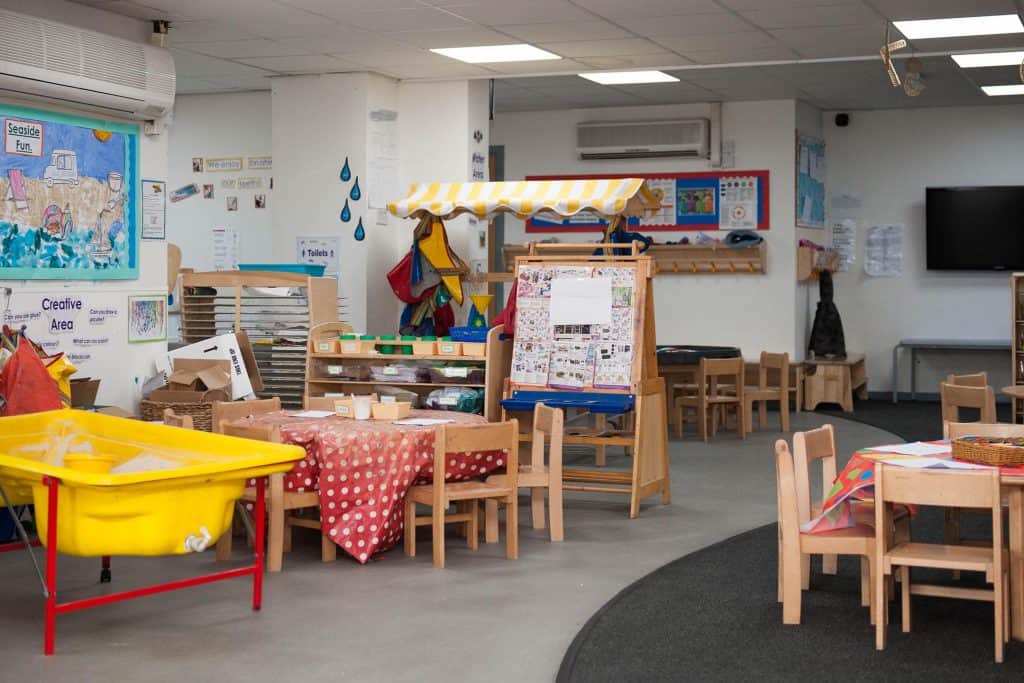
At Sweet Peas Garforth, our suites are organised around children’s developmental stages. Practitioners consider what children can reach, how clearly they can understand a space and whether resources genuinely invite purposeful choice.
Accessible resources allow children to return to ideas, make connections and begin play without always waiting for an adult to provide something. Clearly organised areas help them understand where materials belong and support growing responsibility for the environment.
Child-height storage and familiar places for belongings make everyday routines more manageable. Defined areas give children enough clarity to choose confidently while still leaving room for imagination and flexible thinking.
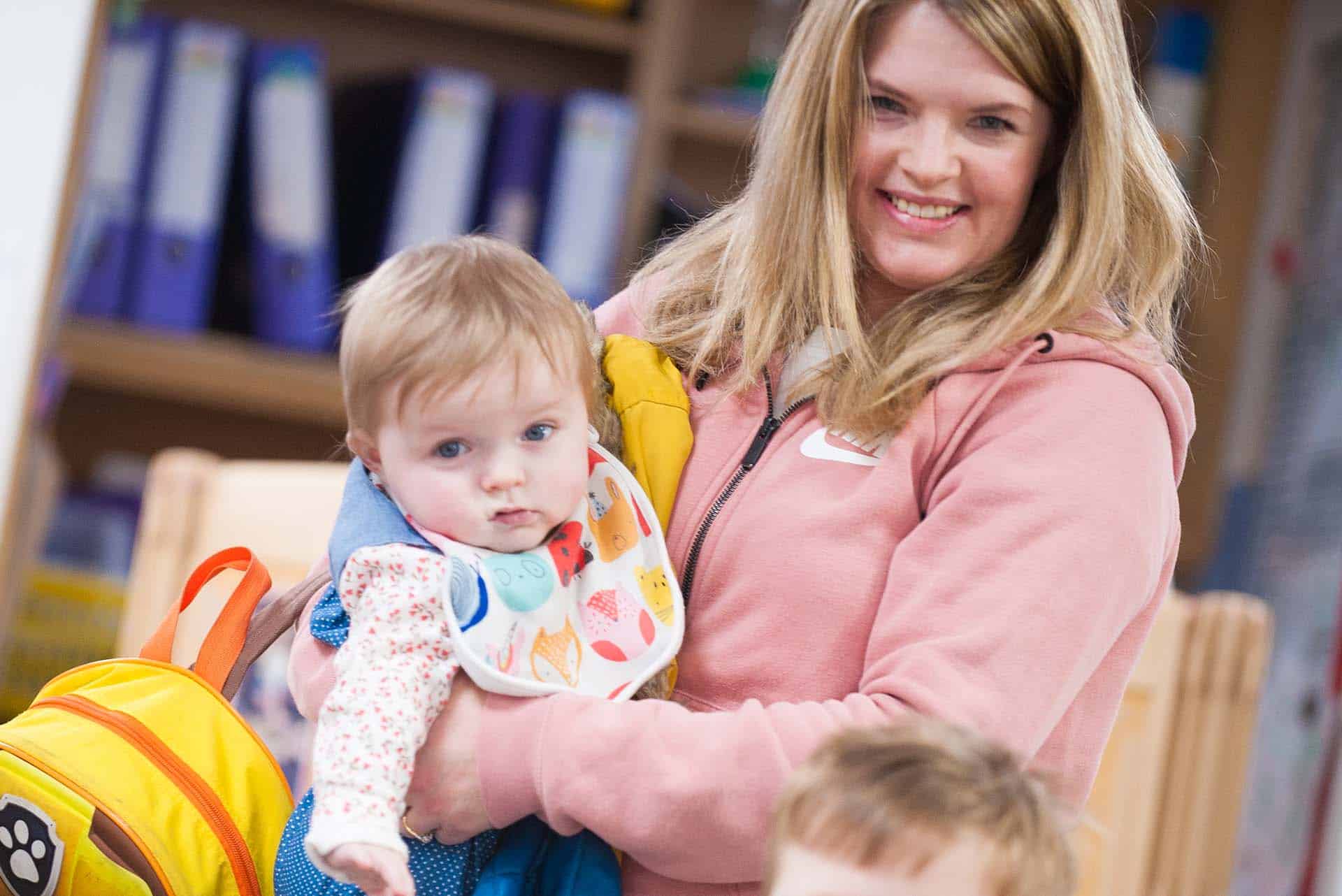
In our Baby Suite, floor space and carefully selected furniture support important early movements such as rolling, sitting, pulling up and cruising. Practitioners create safe opportunities for babies to initiate movement rather than positioning or moving them unnecessarily.
As children grow, their suites offer increasing opportunities to select resources, develop their own ideas and take responsibility within routines.
Our outdoor environments extend this further. Children can move materials, balance, climb and explore sand and water within spaces suited to their stage of development.
Practitioners position themselves thoughtfully and remain alert, but do not remove all manageable challenge. Children need opportunities to assess space, adjust their bodies and develop confidence in their own physical abilities.
The environment is not designed to control every choice. It provides clear, safe and purposeful possibilities from which children can make decisions.
The Practitioner’s Role: Stepping Back While Staying Close
Supporting independence is a delicate balance.
Stepping in too quickly can unintentionally tell a child that the adult can do it better. Waiting without recognising genuine difficulty may leave the child feeling unsupported.
Experienced practitioners continually judge:
- Is the child still engaged or becoming overwhelmed?
- Would a prompt be enough?
- Can one part of the task be made more manageable?
- Is the child safe to continue?
- Would adult involvement deepen learning or interrupt it?
This is sometimes described as scaffolding: providing temporary support that helps a child achieve something they could not yet manage alone, then gradually reducing that support as their skill and confidence develop.
In practice, it may be as simple as holding the bottom of a zip while the child pulls it up, modelling how to steady a jug with two hands or saying, “You have found one sleeve—where might the other one be?”
The practitioner remains emotionally and physically available, but the child retains ownership of the achievement.
Effort is recognised as much as the finished result. When a tower falls, a fastening proves difficult or a new physical challenge takes several attempts, practitioners help children understand that mistakes and repetition are part of learning.
Our article about the benefits of learning through play explores how curiosity, challenge and responsive adult interaction work together. You can also read more about our curriculum and the knowledge that guides our practice.
Independence and School Readiness
Independence supports school readiness, but we do not reduce readiness to a checklist of tasks a child must complete before they leave nursery.
Being ready for the next stage includes feeling confident to communicate needs, join a group, make choices, care for belongings, follow familiar routines and keep trying when something feels difficult.
These abilities are built gradually through secure relationships and meaningful daily experiences.
A child who has learned that adults will help when needed is often more willing to attempt something independently. Emotional security and independence are not opposites; they strengthen one another.
By allowing children to participate actively in nursery life, we help them develop a realistic sense of capability. They learn, “I can try this,” “I can ask for help,” and “I can keep going.”
These are valuable foundations for school and for life beyond it.
Working in Partnership with Families
Children may show different levels of independence at home and nursery, and this is completely normal.
The routines, expectations and emotions within each environment are different. A child who puts on their own shoes at nursery may ask a parent to do it at home. Another may confidently help prepare food at home but prefer to watch at nursery until they feel secure.
Sharing these observations helps us build a fuller picture of the child. Practitioners can explain which approaches are working in nursery, while parents can tell us what their child is practising or finding difficult at home.
Working together creates consistency without placing pressure on the child.
Supporting Independence at Home
Families do not need to turn every routine into a lesson. Small, realistic opportunities are often enough.
You might:
- Allow a little extra time for your child to attempt their coat or shoes
- Offer two manageable choices rather than an overwhelming number
- Invite them to carry a napkin or place something safe on the table
- Encourage them to help return toys after play
- Break a difficult task into smaller steps
- Praise concentration, effort and persistence rather than perfection
- Let them know that asking for help is also a positive skill
If a routine is rushed or your child is tired, it is fine to help. Supporting independence should strengthen connection and confidence, not create unnecessary stress.
The Quiet Progress That Matters
Independence rarely arrives through one dramatic moment. It grows through small experiences repeated over time.
A child who once waited for an adult to choose may begin walking confidently towards the construction area. Another who needed help with every part of getting ready may start by finding their own coat and later attempt the zip.
A quieter child may begin communicating a preference, while a confident child may learn that independence also includes listening to others and taking responsibility within a group.
These changes are noticed and valued because our practitioners understand the development behind them.
At Sweet Peas Garforth, children are never hurried towards the next milestone. They are known as individuals, offered meaningful opportunities and supported by adults who understand when to guide, when to wait and when to celebrate.
If you would like to see how we gently encourage independence, we would love to welcome you to visit our Garforth nursery or book a nursery tour.
Frequently Asked Questions
- How do nurseries encourage independence?
High-quality nurseries create accessible environments, involve children in familiar routines and use skilled adult support. Practitioners help just enough for children to participate successfully, then gradually reduce support as confidence develops.
- What are self-help skills in the early years?
Self-help skills include eating, drinking, dressing, handwashing, managing belongings, making choices and participating in everyday routines. They develop gradually and look different at each age and stage.
- Why is independence important for young children?
Independence supports confidence, communication, physical coordination, problem-solving, perseverance and responsibility. It helps children see themselves as capable while knowing that support remains available.
- Does encouraging independence mean leaving children to struggle?
No. Practitioners observe closely and offer encouragement, demonstrations, prompts or practical help when needed. The aim is to provide the right level of support without taking over unnecessarily.
- How can I help my toddler become more independent?
Offer small choices, allow extra time for familiar tasks and involve your child in manageable routines. Praise effort and remain available to help. Independence should be encouraged gently and without pressure.
- How does independence support school readiness?
It helps children communicate their needs, manage familiar routines, care for belongings, make choices and approach challenges with confidence. These skills grow alongside emotional security and strong relationships.