When families begin comparing nurseries, size is often one of the first things they consider. A smaller nursery may sound more personal, while a larger nursery may appear to offer more space, resources and opportunities.
However, the number of children a nursery is registered to care for does not tell you what your own child’s day will feel like.
A larger nursery can still provide calm, personal and highly attentive care when children are supported within thoughtfully organised, age-appropriate suites. Equally, a smaller setting will not automatically offer high-quality experiences simply because fewer children attend.
What matters most is how the nursery is structured, how effectively its team is deployed and whether practitioners have the knowledge, consistency and time to understand children as individuals.
At Sweet Peas, children do not experience nursery as one large group. Their world is centred around their own suite, their familiar practitioners, predictable routines and relationships that develop over time.
Looking Beyond the Overall Number
A nursery’s total capacity is only one piece of information. To understand what daily life will genuinely be like, parents need to look more closely at how the setting operates.
Useful questions include:
- How are children grouped throughout the day?
- Are rooms organised around children’s ages and developmental stages?
- How many familiar practitioners support each group?
- Do leaders understand what is happening within individual rooms?
- How are routines and transitions managed?
- What happens when a child needs a quieter space or additional support?
- How well do practitioners know each child?
These details have a much greater influence on children’s experiences than the total number registered across the whole building.
A nursery caring for many children can still feel calm and familiar when it is divided into well-led suites with their own consistent teams and carefully designed routines. Children experience the people and spaces immediately around them—not the nursery’s total registration figure.
Age-Appropriate Suites Create Smaller Communities
Organising a nursery into age-appropriate suites allows children to be cared for within smaller, familiar communities.
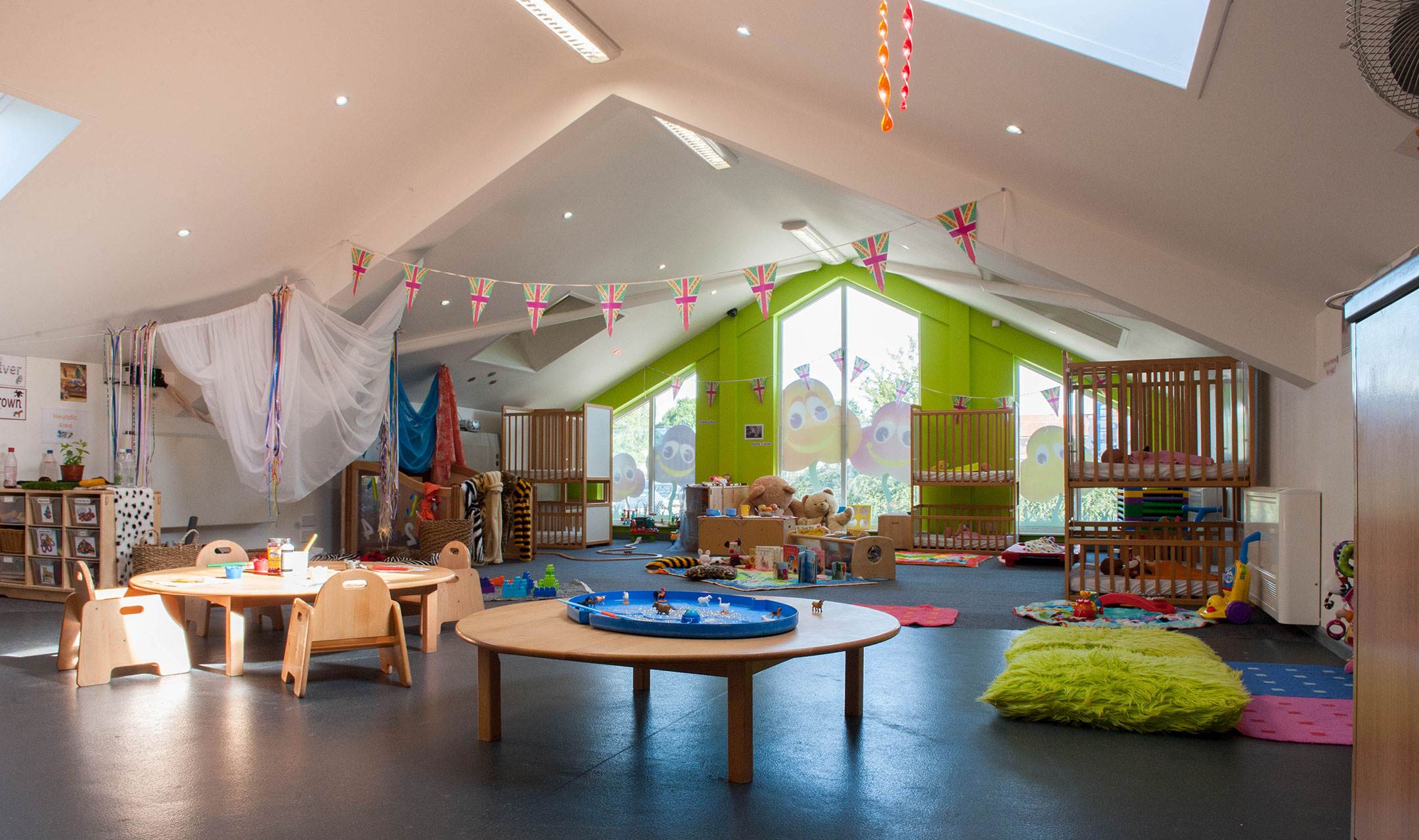
Each suite can be designed around the developmental needs of the children using it. Babies need close relationships, responsive care and safe opportunities to explore with their whole bodies. Toddlers benefit from movement, growing independence, rich language and adults who understand their rapidly changing emotions. Older children need increasing challenge, purposeful responsibility and opportunities to develop confidence ahead of school.
A suite-based structure allows practitioners to tailor:
- Daily routines and transitions
- The layout and pace of the environment
- Resources and learning opportunities
- Communication and language support
- Physical challenges
- Expectations for independence
- Emotional support and relationship-building
This means children are not expected to fit into one nursery-wide approach. Their experience is shaped around their stage of development while remaining responsive to their individual needs.
The suite becomes a secure base. Children know where their belongings are, which adults will greet them and what the rhythm of their day usually looks like. Although they remain part of the wider Sweet Peas community, their daily experience feels manageable and familiar.
Ratios Are Only the Starting Point
Staff-to-child ratios are an essential safeguard within early years care, but meeting a statutory ratio does not by itself guarantee individual attention or high-quality interaction.
What matters is how practitioners are organised across the day.
Skilled leaders consider:
- The ages and individual needs of the children attending
- The qualifications, experience and strengths within each team
- Busier points in the daily routine
- Children who may need additional support
- The layout of rooms and outdoor spaces
- The continuity provided by key people and familiar practitioners
This thoughtful deployment helps ensure that adults are available where children need them most. It also allows routines such as meals, sleep, outdoor play and collection times to remain carefully supervised without losing the quality of interaction children receive.
At Sweet Peas, being known by name is only the beginning. Practitioners learn how each child communicates, what helps them settle, which experiences capture their interest and when they may need reassurance, challenge or space to persevere independently.
A confident child may readily approach an adult. A quieter child may communicate through a glance, a gesture or a subtle change in behaviour. Highly skilled practitioners recognise these individual cues and respond sensitively.
The strength of a nursery does not lie simply in how many adults are present. It lies in whether those adults are knowledgeable, attentive and organised around the children in front of them.
The Key Person Approach Keeps Care Personal
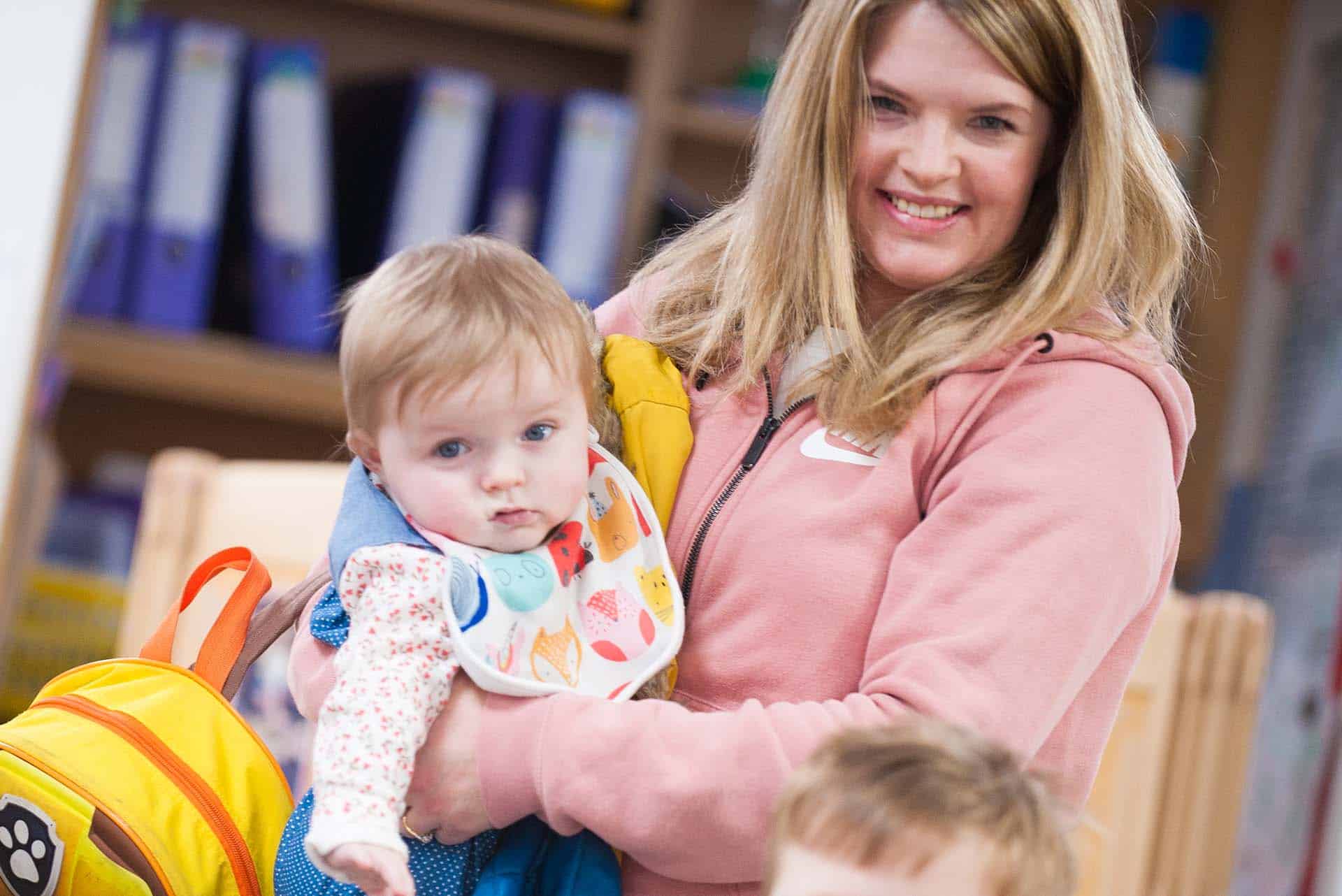
Every child at Sweet Peas is supported by a key person who develops a close understanding of their routines, communication, interests and development.
Within a larger nursery, a strong key person approach is particularly important. It ensures that each child has someone who holds a detailed picture of their experience and works closely with their family.
A key person may notice:
- A new word or gesture beginning to emerge
- A change in confidence or emotional presentation
- A repeated interest that could be extended
- Progress within a physical or self-care skill
- A pattern that would be helpful to discuss with parents
- When a child is ready for greater challenge or responsibility
However, children should not feel secure with only one adult. They are also known by the wider suite team, which means another trusted practitioner can support them when their key person is on leave, completing training or working with another child.
This combination gives children both a special key-person relationship and the security of a wider circle of familiar adults.
You can read more about our key person system and how it supports children and families.
Calm Is Created Through Skilled Organisation
It is easy to assume that a larger nursery will automatically feel louder or busier. In reality, atmosphere is shaped by design, routines, leadership and adult practice.
A calm nursery is not a silent nursery. Children should be able to talk, laugh, move, create and become excited by their discoveries.
Calm means the day feels purposeful rather than chaotic. Children can concentrate without unnecessary interruption, routines are predictable and practitioners guide transitions thoughtfully.
Suite-based organisation can support this by limiting how many children move through the same space at once. Mealtimes, outdoor access and changes between activities can be planned around the needs of individual groups rather than requiring the whole nursery to do the same thing together.
Practitioners also consider the sensory experience of each room. They notice noise levels, visual clutter, movement and whether children can access quieter spaces when they need them.
This is particularly valuable for babies, children who are more cautious in groups and children with additional sensory or communication needs. A well-organised environment allows them to participate in nursery life without feeling lost within it.
Skilled Practitioners Make the Difference
The quality of a nursery is ultimately shaped by the adults within it.
Highly skilled early years practitioners look beyond what a child is doing and consider what they may be learning, communicating or feeling.
When a child repeatedly builds a structure, the practitioner may recognise early mathematical thinking, coordination, perseverance and problem-solving. When a child watches from the edge of play, they consider whether the child needs time, reassurance or a carefully offered route into the experience.
Practitioners make countless professional decisions throughout the day:
- When to introduce new vocabulary
- How to extend an idea without taking over
- When to model a skill
- How much challenge is appropriate
- When a child needs emotional support
- When to step back and protect deep concentration
These decisions rely on knowledge of child development and a close understanding of the individual child.
Nursery structure should enable this expertise. Practitioners need clear responsibilities, effective leadership, purposeful environments and opportunities to communicate and reflect with colleagues.
Whether a nursery is smaller or larger, it is this quality of professional thinking that turns everyday moments into meaningful learning.
Purposeful Environments Within Every Suite
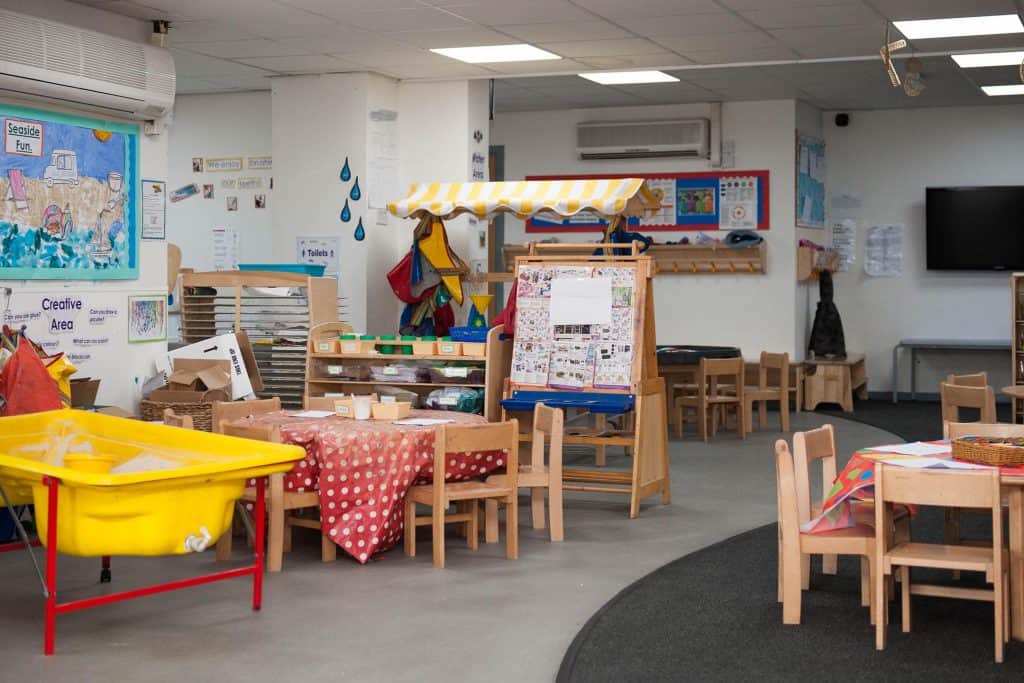
The environment is an important part of teaching in the early years.
Within each Sweet Peas suite, spaces and resources can be planned around the developmental needs of the children using them. Practitioners continually evaluate whether the environment is supporting independence, concentration, communication and exploration.
They may:
- Adapt an area in response to children’s emerging interests
- Add resources that introduce greater challenge
- Create quieter spaces for regulation and focused play
- Reorganise materials so children can make independent choices
- Adjust the room when too many options are affecting engagement
- Provide physical opportunities suited to children’s current abilities
This is not simply about making a room look attractive. Every decision should have a purpose and be informed by observation.
A larger nursery may offer extensive spaces and resources, but the real value comes from how thoughtfully those spaces are used. Children benefit when their immediate environment feels understandable, inviting and genuinely designed for them.
Visible Leadership Across the Nursery
As a nursery grows, strong and visible leadership becomes increasingly important.
Leaders need systems that allow them to understand what children are experiencing across every suite. They must remain connected to practice, support practitioners promptly and ensure that expectations are consistent throughout the nursery.
At Sweet Peas, leadership is not intended to feel distant from nursery life. Leaders spend time within the suites, speak with families, observe practice and work closely with suite leaders and practitioners.
This allows them to:
- Recognise strengths and celebrate effective practice
- Identify where coaching or additional support is needed
- Monitor the quality and consistency of children’s experiences
- Respond quickly when routines need adapting
- Ensure safeguarding and welfare expectations remain strong
- Keep decisions focused on their impact on children
In a larger setting, leadership cannot rely on one person knowing everything alone. Clear roles, skilled suite leaders and effective communication create layers of close oversight without creating unnecessary distance from children and families.
Communication Should Never Feel Complicated
Parents should not have to navigate the size or structure of a nursery to get a clear answer about their child.
Their main relationship will often be with their child’s key person and suite team, who can share meaningful information about the day. When a question needs leadership involvement, clear communication systems should ensure it reaches the right person promptly.
At Sweet Peas, information shared by families helps us understand the whole child. A disrupted night, a change at home, a new interest or a concern about development may all influence the support a child needs that day.
Strong communication within and between suites means relevant information can be acted upon rather than simply recorded.
When more sensitive conversations are needed, practitioners and leaders can draw on their observations, listen to parents and agree a thoughtful way forward together. The size of the nursery should never prevent communication from feeling personal.
Smooth and Thoughtful Transitions
One advantage of a nursery with several age-appropriate suites is that children can progress through environments designed for each stage while remaining within the same wider community.
Moving suites is not treated as a simple administrative change. Practitioners consider whether the child is emotionally and developmentally ready, not only whether they have reached a particular age.
A thoughtful transition may include:
- Visits to the new suite
- Time with the new key person and familiar practitioners
- Information-sharing between the current and receiving teams
- Conversations with parents
- Familiar routines or comfort strategies continuing where appropriate
- A pace adapted around the individual child
Children may already recognise adults across the wider nursery, helping the new suite feel less unfamiliar.
This allows a larger setting to offer breadth and progression without losing the importance of close relationships.
Smaller and Larger Nurseries Can Both Offer Exceptional Care
A smaller nursery may appeal to families who prefer a more compact environment or fewer people within the wider building. A larger setting may offer more extensive spaces, specialist environments, broader peer groups or greater continuity across several developmental stages.
Neither is automatically better.
The important question is whether the nursery’s structure protects what matters:
- Is each child known and understood?
- Do practitioners have time for meaningful interaction?
- Are rooms calm, purposeful and suited to the children using them?
- Are familiar relationships prioritised?
- Is leadership visible and effective?
- Do parents know who to speak to?
- Are children’s needs driving decisions?
If these foundations are strong, a nursery can feel personal and attentive regardless of its overall capacity.
What This Looks Like at Sweet Peas
Sweet Peas has two independently owned and locally led nurseries in Leeds: Sweet Peas Garforth and Sweet Peas Rothwell.
The nurseries are not identical in size or layout, and we would not want them to be. Each has its own community, character and strengths.
What connects them is the Sweet Peas approach:
- Children cared for within age-appropriate suites
- A strong key person system
- Familiar and knowledgeable suite teams
- Purposeful environments and routines
- Skilled practitioners who understand child development
- Visible leaders who remain close to practice
- Personal communication with families
- Decisions made locally with children at the centre
Being independent allows us to protect these principles while responding to the individual needs of each nursery community.
One Sweet Peas nursery may be larger overall, but children still experience it through their own suite, relationships and daily routines. The aim is never for a child to feel like one among many. Every child should feel known, secure and supported to thrive.
Choosing with Confidence
When visiting a nursery, try not to base your decision on its overall size alone. Notice how children are grouped, how practitioners interact with them and whether the environment feels calm, purposeful and welcoming.
The right nursery should feel like a place where your child will be known, supported and encouraged as they grow. If you would like to find out more about Sweet Peas Garforth or Sweet Peas Rothwell, please contact us to arrange a visit.