The 6 August is Playday, the national day for play, celebrated each year across the UK and this year’s theme is Spaces for Play.

In this blog, Sweet Peas Suite Leader, Shannen Rose tells us about the importance of providing quality, inclusive spaces for children, giving them the opportunity to play, promoting fun and friendships.
She also gives lots of examples of how this is working in practice at Sweet Peas Nursery and three top tips.
The importance of accessible and inclusive spaces for play
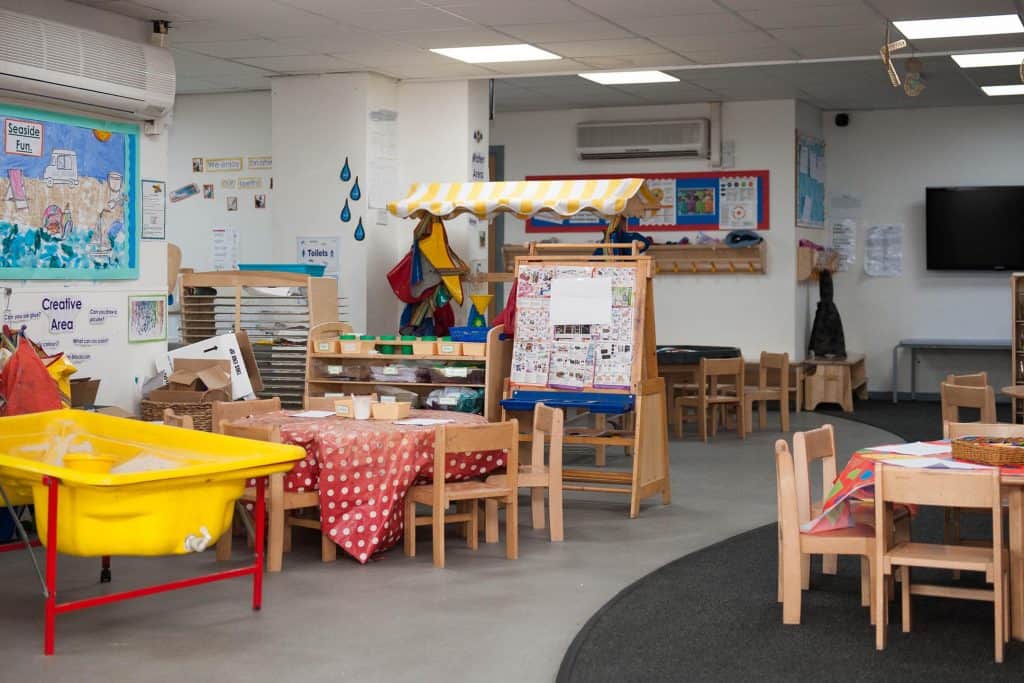
We’re really excited to be supporting National Play Day – it’s all about celebrating every child’s right to play. At Sweet Peas, we understand the importance of making play a big part of every day, with an abundance of space and fun areas for the children to explore. Our spaces have everything from individual kitchens, bathrooms and changing areas to big indoor and outdoor spaces where kids can get creative, get messy, and most of all, have fun together!
I look after the Toddler Suite, home to children aged 27 months to 3 years. Every child is completely different and this is the magical age where their personalities burst into life. One minute we’re playing shops, chatting about what to buy and what’s on the shelves. The next, we’re off on a wild ride to the zoo aboard an invisible train. With imaginations this big, you never quite know where the day will take us, but it’s always somewhere fun!
Laying the foundations for learning
To make this happen, we believe in creating inclusive spaces where every child feels they belong. No matter their background or culture, every child deserves the same opportunities, the same joyful start to life, free from barriers. In the toddler stage, we lay the foundation for all the learning that lies ahead, nurturing the skills they’ll carry into their school years.
We believe every child should have a choice in what they are going to learn. That’s why our environment is designed at their height, so they can explore freely and make their own choices. Every activity we offer may look simple on the surface, but it’s thoughtfully planned and tailored to every child.
Priorities when planning play
When planning play, my priorities include the following:
• Inclusivity – Designing spaces that cater to a wide range of abilities, needs, and cultural backgrounds, for example:
• When children join our setting with English as a second language, we ask parents for key words to use during play. We then use both their home language and English in group activities, helping to make the experiences feel familiar. Other children often pick up and use these words too, creating an inclusive environment where everyone feels the same.
• We provide thicker pencils and crayons to support different stages of pencil grip development. This allows children to mark-make in a way that suits them, using a variety of grips, so everyone can take part and no one feels left out.
• Safety – Ensuring the environment is physically and emotionally safe for all children, for example:
• Emotionally safe: We talk with children about their feelings, especially when they’re upset, helping them name emotions and understand why they feel that way. We read books at group time and discuss different facial expressions to explore different emotions together.
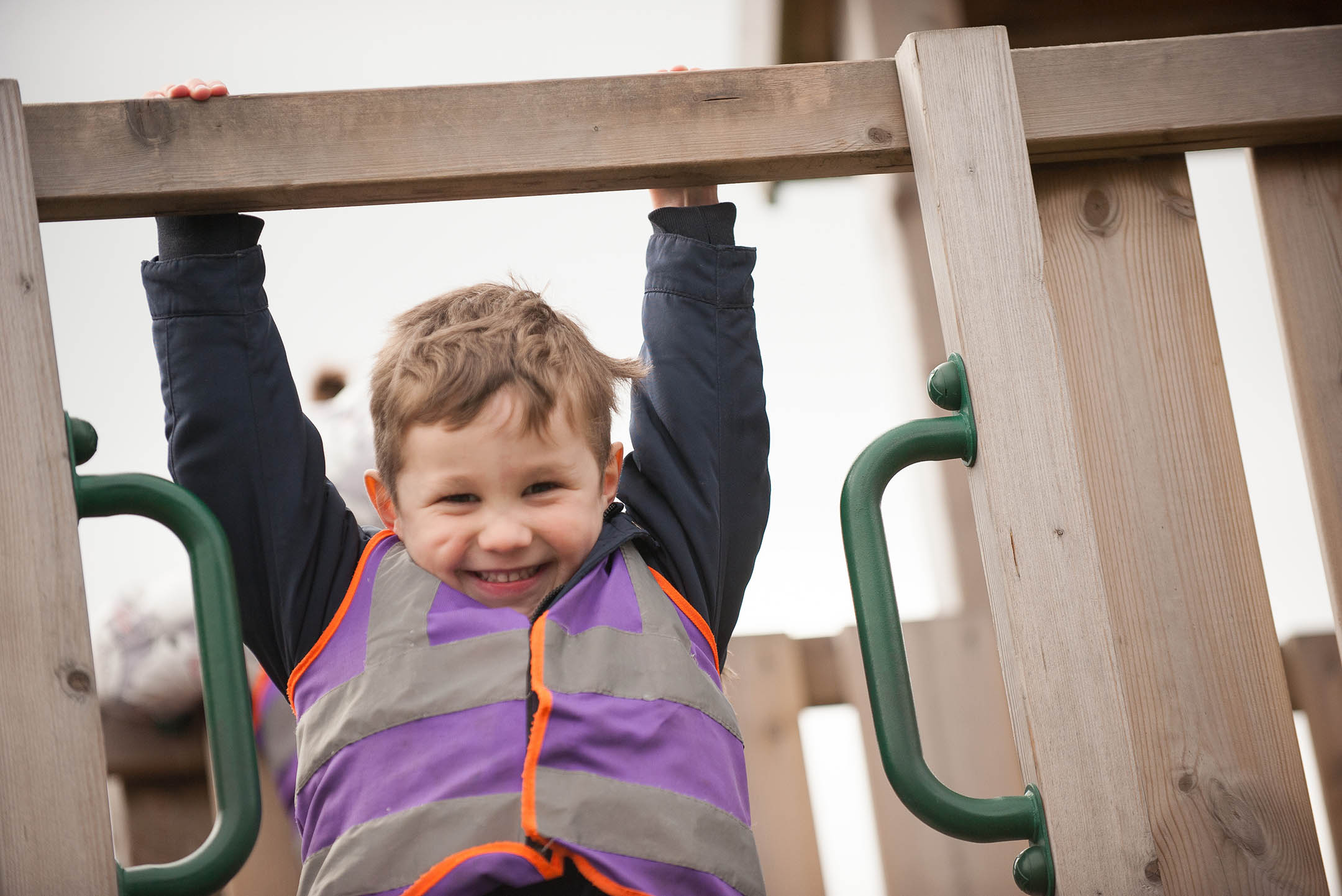
• Physically safe: We carry out risk assessments and supervise activities like the climbing frame closely. We teach children what’s safe to do and support them without doing it for them, encouraging safe independence.
• Engagement – Providing stimulating and varied play options (physical, creative, social, sensory) to support holistic development, for example:
• One theme was fossils: we spread a big roll of paper on the floor and provided stampers, rollers, paint, and hand-paint options. Children enjoy the sensory experience, learning patience as they wait for the paint to dry and developing early writing skills by noticing that their physical actions leave marks.
• Playdough helps build fine motor skills by encouraging children to squeeze, roll, and shape, strengthening finger muscles needed for holding a pencil. It’s one of the many benefits of learning through play in the early years, accessible to every child in their own way.
• Accessibility – Ensuring the space is usable by children with mobility, sensory, or cognitive challenges, and considering care needs too.
• We are equipped to support children with a variety of needs, including those with disabilities, temporary injuries like broken legs or elbows, and children who wear glasses.
• We use Makaton and visual timetables to support children who learn best visually. Speech and communication are a big focus in our room. Often, children know what they want to say but just haven’t found the words yet, and these tools help bridge that gap.
• Flexibility – Creating adaptable spaces that encourage imagination and can grow with the children’s needs and interests. For example:
• We offer a variety of role play areas, including a home corner, role play with costumes and hard hats, and a construction area with different sizes of blocks to support physical development. There’s also a space where we can bake together, a malleable area and large movement play area.
It’s important to gather feedback on needs and experiences of children and young people themselves
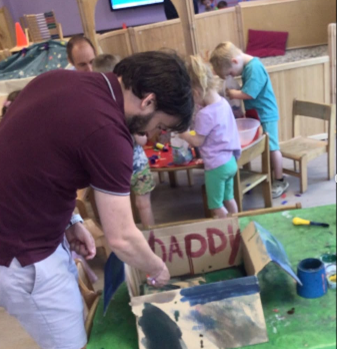
Listening to children, families, and communities helps us create spaces that truly reflect their needs and values. We share observations with families through our Parent App, inviting their comments and feedback. We also host regular “Stay and Play” sessions to engage families. Recently, for Father’s Day, we invited parents to join us for den-building using large boxes, blocks, shower curtains, and garden materials – it turned into a Heroes Day celebrating dads, grandparents, and same-sex parents, ensuring everyone felt included.
On International Grandparents Day, we welcomed grandparents to help plant flowers for the “Garforth in Bloom” community project. For Mother’s Day, we hosted an afternoon tea with fun activities in our suite. Bringing families together is at the heart of what we do.
Our advice to others for championing better spaces for play
1. Don’t overthink it
a) You don’t need a fancy park to get children outside – any open space like a garden or field will work. Simple games like “What time is it, Mr. Wolf?”, little races, hopscotch, star jumps, or just passing a ball around help them move, learn, and have fun. Plus, it’s a great way to bond with them, especially at this age!
2. Follow your child’s lead
a) Get stuck into their imaginary play and go with the flow, You might be roaring like a lion one moment and pretending to be a doctor to their doll the next – there’s no need to be embarrassed! When you really listen, it shows them you care – and even if it seems like a small thing to us, it can mean the world to them.
3. Give them your full attention
a) If children notice you’re distracted, they’ll tune out. Toddlers need to know you’re fully present, even if playtime is shorter or takes unexpected turns – follow their lead and stay engaged with lots of eye contact and respond to what they say.
I absolutely love working at Sweet Peas
No two days are ever the same! Things change so quickly, and that’s what keeps it exciting. The days fly by, and we can’t wait to celebrate National Play Day! As they say, “Play is every child’s right – on Playday and every day,” and we truly believe that here.
I hope you have learnt a little from my blog and if you would like to join our team, please get in touch – we’d love to hear from you.
Visit our careers page https://sweetpeasnursery.co.uk/join-us/
Or drop us a line recruit@sweetpeasnursery.co.uk
About Sweet Peas
Sweet Peas Day Care & Teaching Nurseries, Garforth, Leeds, is a trusted, family owned day nursery, providing exceptional early years education and childcare. Our approach is distinct and innovative in cultivating the development of children and team members, coupled with building strong collaborative relationships with families.
Find out more about National Play Day – 6 August
Playday is coordinated by Play England, Play Wales, Play Scotland and PlayBoard Northern Ireland.