When people picture learning, they often imagine tables, worksheets or an adult standing at the front of a room. In the early years, meaningful learning looks very different.
It can look like a child building a tower, watching it fall and carefully changing the base before trying again. It may be two children negotiating roles in an imaginary café, or a baby repeatedly filling and emptying a container as they begin to understand space, quantity and cause and effect.
To an untrained eye, these moments may look like children are “just playing”. A skilled early years practitioner sees much more.
They recognise the early mathematics within the tower, the developing language and social understanding within the café, and the scientific thinking within a baby’s repeated exploration. They know how to respond in a way that deepens learning without interrupting the child’s concentration or taking ownership of the experience away from them.
In the early years, play is not a break from learning. Play is one of the most powerful ways in which learning happens.
What Does Learning Through Play Mean?
Learning through play allows children to explore ideas, test possibilities, make connections and develop understanding through first-hand experience.
Rather than simply being given information, children become active participants in their learning. They investigate, repeat, adapt and discover. This matters because young children learn most deeply when they are physically, emotionally and intellectually involved in what they are doing.
The Early Years Foundation Stage framework, commonly known as the EYFS, places play and responsive adult interaction at the heart of effective early education. It recognises that children learn through active exploration, purposeful engagement and opportunities to think creatively and critically.
High-quality play-based learning is therefore not unplanned or accidental. It is underpinned by:
- A secure understanding of child development
- Careful observation of what a child can already do
- Knowledge of each child’s interests, experiences and next steps
- Purposeful environments and thoughtfully selected resources
- Skilled interactions that introduce language, ideas and appropriate challenge
- Ongoing professional reflection about the impact on children’s learning
At Sweet Peas, our practitioners understand that the most effective teaching does not always look like an adult delivering an activity. Often, it is a carefully timed comment, a thoughtfully chosen question, a new resource introduced at exactly the right moment or the professional judgement to remain close by and allow a child to persevere independently.
Why Is Play Important in the Early Years?
Young children are not miniature adults. Their development is shaped through movement, relationships, sensory exploration, repetition and meaningful experiences.
Play gives children the freedom to test ideas without fear of getting something wrong. They can change their approach, solve a problem, revisit an experience and practise a developing skill until it becomes secure.
Through play, children learn to:
- Sustain attention and become deeply involved
- Make choices and develop independence
- Communicate their thoughts, needs and ideas
- Cope with manageable challenge and frustration
- Recognise patterns and make connections
- Use imagination and think flexibly
- Apply emerging knowledge in meaningful situations
Our role is not to make play look more formal. It is to understand the depth of learning taking place and use professional expertise to help each child move forward.
How Skilled Practitioners Deepen Children’s Play
The quality of play-based learning depends not only on the resources available, but on the knowledge and responsiveness of the adults supporting it.
At Sweet Peas, practitioners observe closely before deciding how to respond. They consider what the child is trying to achieve, which skills are emerging and whether adult involvement would deepen the experience or disturb valuable concentration.
At different moments, a practitioner may:
- Model new vocabulary within a natural conversation
- Wonder aloud to encourage a child to think more deeply
- Introduce an additional material that creates a new possibility
- Demonstrate a technique before allowing the child to try independently
- Help children negotiate ideas without solving the disagreement for them
- Revisit previous learning and help a child make connections
- Reduce support gradually as confidence and competence grow
This balance requires genuine skill. Stepping in too quickly can limit children’s thinking, while remaining too distant may mean an opportunity for learning is missed. Experienced practitioners continually make these finely judged decisions throughout the day.
Cognitive Benefits of Learning Through Play
Play develops children’s ability to think, reason, remember, predict and solve problems. It gives early concepts a real purpose and helps children connect new knowledge with what they already understand.
Problem-Solving and Critical Thinking
When children build with blocks, they explore balance, stability, shape and cause and effect. If a structure collapses, they gather immediate information from what happened and use it to adapt their next attempt.
A skilled practitioner may support this thinking with language such as, “I wonder what made that side less steady?” They do not rush to provide the answer. Instead, they create space for the child to predict, test and evaluate.
This process develops persistence, flexible thinking and confidence in approaching unfamiliar problems.
Communication and Language
Play creates a meaningful reason for children to communicate. They explain ideas, negotiate roles, listen to others, retell experiences and experiment with new vocabulary.
In imaginative play, a practitioner may sensitively introduce words connected with the children’s ideas. During construction, they might model language such as higher, stable, between or balance. With babies, they respond to gestures, sounds and expressions, building the earliest foundations of reciprocal communication.
The expertise lies in matching language to the child’s developmental stage and enriching the interaction without dominating it.
Early Mathematical Understanding
Mathematical thinking is woven naturally through play. Children sort, count, compare, estimate, measure, recognise patterns and explore shape and space.
Sharing pretend food introduces quantity and one-to-one correspondence. Filling containers develops an understanding of capacity. Building an enclosure involves shape, position and spatial reasoning.
Practitioners make these concepts visible through carefully chosen language and questions. This helps children understand mathematics as something useful and meaningful, rather than a collection of isolated facts.
Memory, Concentration and Sustained Thinking
When children are deeply interested, they often concentrate for much longer than they would during a task chosen entirely by an adult.
Skilled practitioners protect this involvement. They avoid unnecessary interruptions, provide time for children to return to their ideas and help them recall what they tried previously. Over time, this strengthens working memory, attention and the ability to pursue an idea in depth.
Social and Emotional Benefits of Play
Play gives children a safe and meaningful space in which to understand themselves, build relationships and make sense of their experiences.
Confidence and Independence
When children are trusted to make choices, test ideas and solve manageable problems, they begin to see themselves as capable learners.
A practitioner may offer encouragement, but they resist completing a task on the child’s behalf. This allows the child to experience the genuine pride that comes from persevering and succeeding independently.
Cooperation and Communication
Shared play involves complex social learning. Children encounter different viewpoints, communicate their intentions, negotiate roles and begin to understand fairness.
Practitioners support these interactions with care. Rather than simply telling children to share, they help them express what has happened, recognise another child’s perspective and find a workable solution. These are sophisticated skills that develop gradually through sensitive adult guidance and repeated experience.
Emotional Regulation and Resilience
Children often use play to explore experiences they do not yet have the language to explain. Through role play, stories and repeated scenarios, they can revisit events, express feelings and develop a sense of control.
Knowledgeable practitioners notice the emotional themes within children’s play and respond sensitively. They do not make assumptions or intrude, but remain emotionally available and use their understanding of the individual child to offer the right level of support.
Our article on how early years settings support emotional development explores how secure relationships and thoughtful practice work together.
Resilience also grows through everyday challenges: rebuilding a structure, waiting for a turn, trying a physical movement again or recovering from a disagreement. With a trusted adult nearby, children learn that difficulty can be managed and that mistakes are part of learning.
Physical Benefits of Play
Young children learn with their whole bodies. Physical development supports not only movement, but also confidence, independence, concentration and later skills such as writing.
Gross Motor Development
Running, climbing, jumping, balancing, pushing and pulling strengthen the large muscles children need for stability, coordination and control.
Practitioners consider how to offer appropriate challenge while managing risk responsibly. They observe how a child moves, recognise when they are ready for greater complexity and support them without removing the opportunity to judge risk and develop confidence.
Fine Motor Development
Threading, pouring, fastening, moulding, drawing and manipulating small objects strengthen the hands and fingers while developing hand–eye coordination.
Skilled practitioners understand the progression behind these abilities. Before expecting a child to control a pencil, they ensure there are rich opportunities to develop shoulder stability, core strength, wrist control and hand strength through meaningful play.
Physical development is not separate from learning. It is one of its essential foundations.
Different Types of Play and the Learning Within Them
Play takes many forms, and children may move between them throughout the day.
Imaginative Play
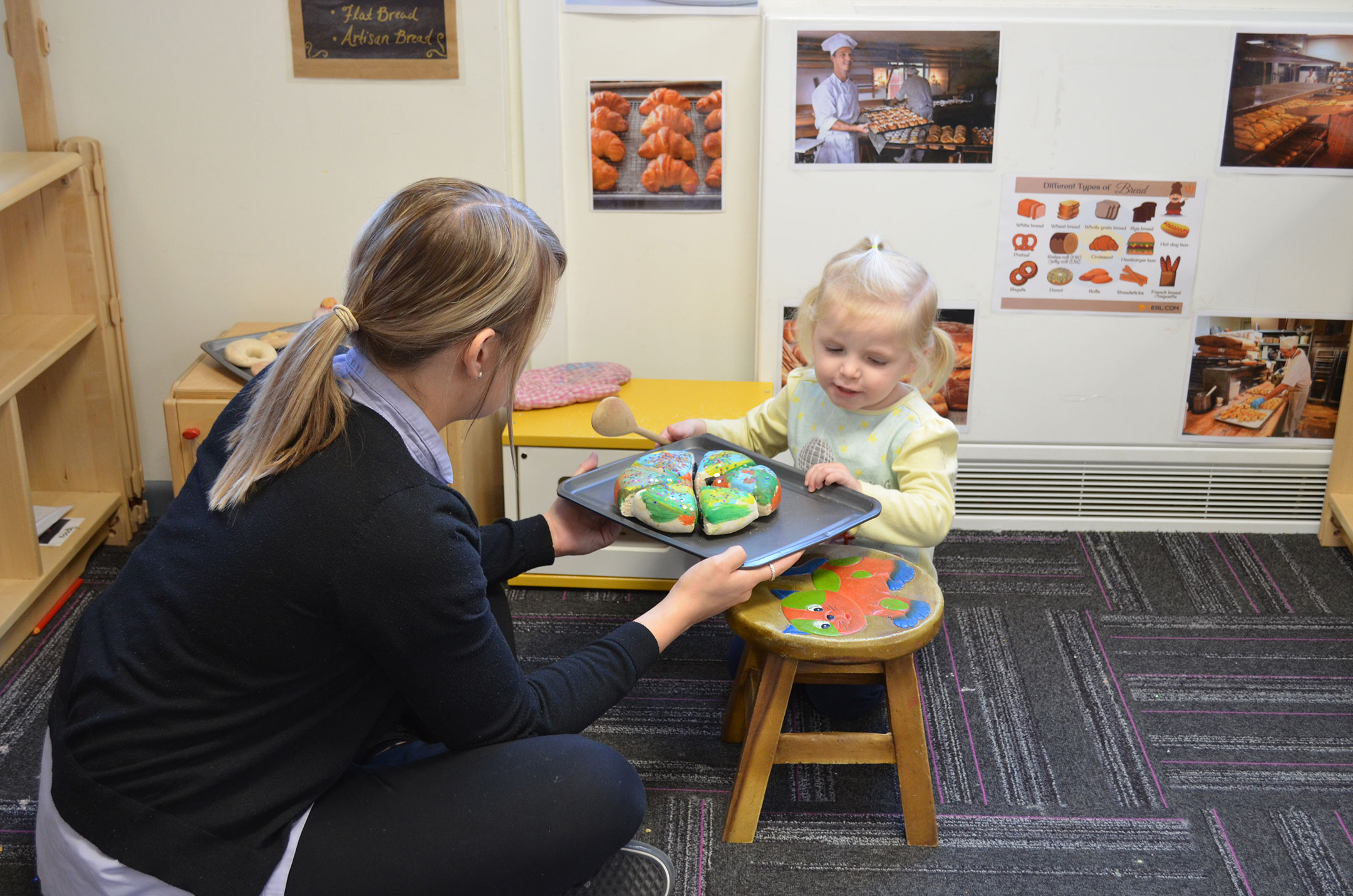
Pretending to run a café, care for a baby or travel on a bus supports language, creativity, empathy and children’s understanding of the world around them.
Constructive Play
Building, joining and arranging materials develops planning, spatial awareness, problem-solving and early mathematical and engineering concepts.
Sensory Play
Exploring water, sand, clay and other materials gives children opportunities to compare, predict, investigate and regulate their sensory responses.
Physical Play
Climbing, dancing, running and balancing build strength, coordination, body awareness and confidence.
Cooperative Play
Creating something together or developing a shared imaginary world requires communication, negotiation, patience and an awareness of other people’s ideas.
Practitioners do not view these experiences as separate boxes to tick. They recognise that one rich episode of play can support many aspects of learning at the same time.
Is Play-Based Learning Better Than Structured Learning?
Play-based learning does not mean there is no structure, teaching or adult direction. High-quality early years practice uses a thoughtful balance of child-initiated play, responsive interaction and well-planned adult-guided experiences.
There are times when a practitioner will teach something directly, demonstrate a skill or lead a carefully planned experience. There are also times when a child’s self-chosen play creates a much richer opportunity for learning.
Professional expertise lies in knowing which approach is most appropriate for the child, the learning intention and the moment.
At Sweet Peas, structure exists within the environment, routines, curriculum and practitioners’ knowledge of each child. Children experience freedom within a setting that has been carefully designed to support progression.
What Does the EYFS Say About Play?
The Early Years Foundation Stage recognises that children learn through playing and exploring, active learning, and creating and thinking critically.
It supports a balance between child-initiated experiences and purposeful adult guidance. This allows children’s interests and natural curiosity to remain central while practitioners ensure that learning is broad, ambitious and responsive to individual development.
Play-based practice is therefore not the absence of teaching. It is teaching shaped around how young children learn most effectively.
How Sweet Peas Plans for Purposeful Play
At Sweet Peas, planning begins with knowing our children.
Practitioners draw on observation, professional knowledge, conversations with families and an understanding of each child’s development. They consider what children are secure in, what is beginning to emerge and which experiences may help them deepen or extend their learning.
They then shape environments, interactions and opportunities with purpose. This may involve enhancing an area in response to children’s thinking, revisiting an experience to consolidate learning or planning a focused interaction to address an identified need.
Our curriculum explains how we support progression while remaining responsive to the children in front of us.
You can also read what learning through play looks like at Sweet Peas to see how these principles are reflected in daily nursery life.
Why the Environment Matters
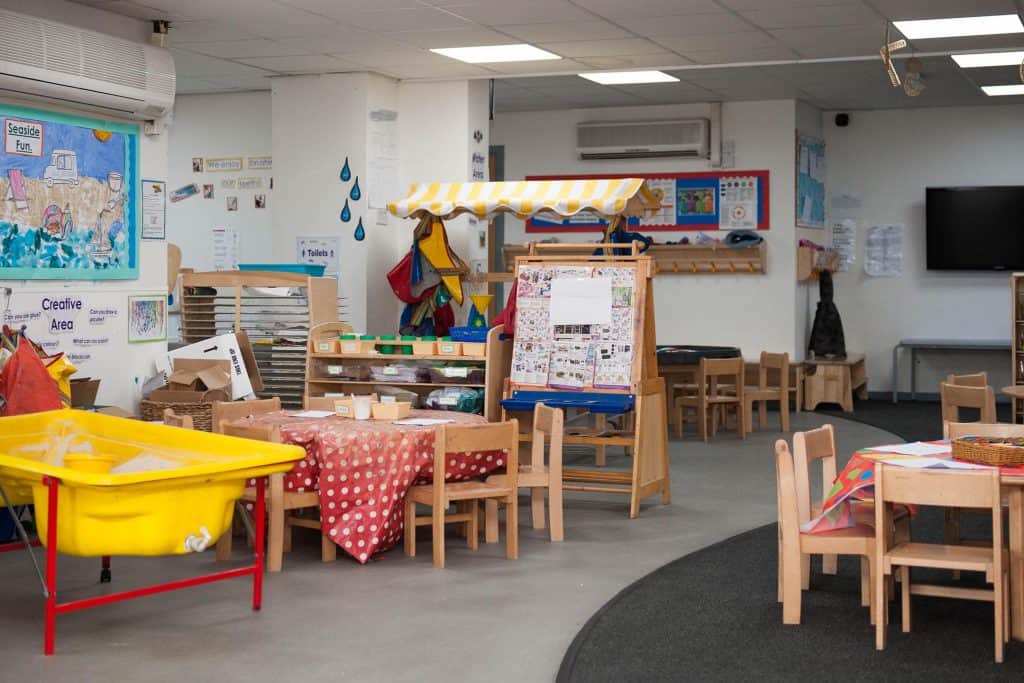
The environment is an important part of teaching in the early years. Every space communicates possibilities to children.
Open-ended materials encourage imagination because they can be used in many ways. Carefully organised resources support independence. Calm, inviting spaces help children concentrate, while opportunities for movement and appropriate challenge encourage physical confidence.
Practitioners continually evaluate how well the environment is working. They notice which areas inspire deep engagement, where children encounter unnecessary barriers and how spaces might be adapted to meet changing interests and developmental needs.
Sweet Peas champions better spaces for play explains more about the relationship between thoughtful environments and high-quality learning.
Bringing It All Together
The benefits of learning through play reach across every aspect of a child’s development. Language, thinking, physical competence, emotional security, creativity and resilience all grow through meaningful experiences supported by knowledgeable adults.
What children experience as joyful, absorbing play is underpinned by a great deal of professional thought. Behind each carefully prepared space, well-timed interaction and sensitively adapted experience is a practitioner observing, interpreting and deciding how best to support that individual child.
This is what high-quality early education looks like at Sweet Peas: children feeling safe and free to explore, with skilled practitioners close by who understand the learning within each moment and know how to help it grow.
If you would like to experience our approach in person, we warmly invite you to book a nursery tour, meet our team and see purposeful play in action.
Frequently Asked Questions
- What is learning through play?
Learning through play is an approach through which children explore, investigate and build understanding through meaningful first-hand experiences. Skilled practitioners observe, plan and interact carefully to help deepen that learning.
- Why is play important in early childhood?
Play supports children’s cognitive, social, emotional, physical and language development. It allows them to practise skills, test ideas, make connections and build confidence in ways that are appropriate to their stage of development.
- What is the adult’s role in play-based learning?
Practitioners create purposeful environments, observe children closely and decide when to model, question, introduce new language or add challenge. They also recognise when stepping back will allow valuable independent thinking to continue.
- How does play support a child’s development?
Play strengthens problem-solving, communication, coordination, emotional regulation, resilience and independence. One rich play experience can support several areas of development at the same time.
- What are examples of learning through play?
Examples include imaginative role play, construction, sensory exploration, outdoor physical play, stories, creative experiences and cooperative projects.
- What does the EYFS say about play?
The EYFS recognises playing and exploring, active learning, and creating and thinking critically as important ways in which children engage with and develop their learning.
- Is play-based learning better than structured learning?
Young children benefit from a thoughtful balance. Play-based learning allows them to explore and apply ideas, while skilled adult guidance can introduce knowledge, demonstrate techniques and provide appropriate challenge. High-quality practice brings these approaches together.